Table of contents
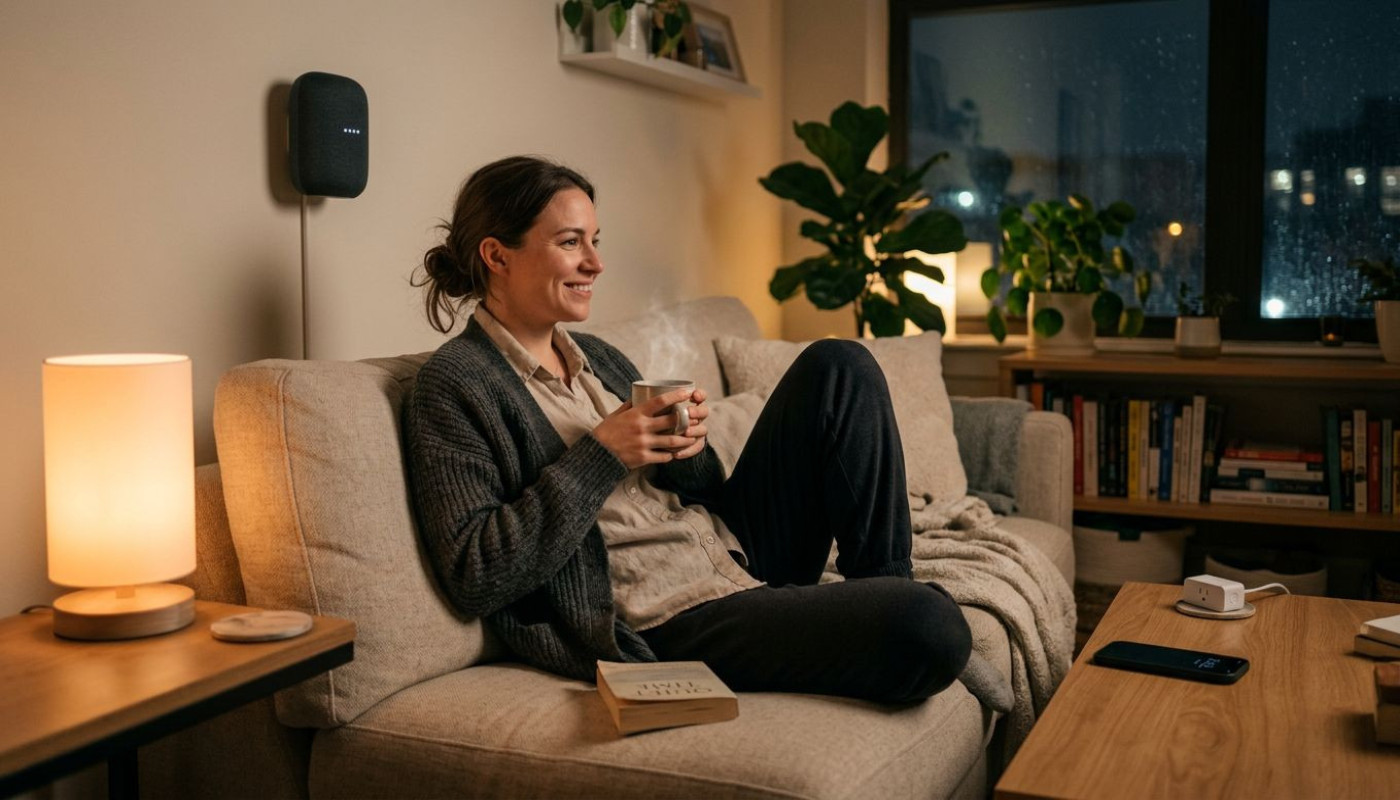
Downtime used to mean switching off, but in 2026 it increasingly means switching settings, as smart speakers, lighting systems, robot vacuums and connected TVs take over small tasks and quietly reshape what “rest” looks like at home. The shift is measurable, from surging adoption rates to the way households distribute time between chores, entertainment and sleep, and it is also political, with regulators scrutinising always-on microphones and data-hungry apps. The result is a new kind of leisure, more automated, more fragmented and, for many, more comfortable.
Small automations, big time reclaimed
It starts with minutes, and minutes add up. When a robot vacuum runs while you are out, when lights dim automatically at sunset, or when the thermostat learns your routine, the day’s friction drops almost imperceptibly, yet the cumulative effect can be substantial over a week. Analysts have long argued that “time poverty” is not only about work hours, but also about the hidden load of domestic tasks, and smart home devices are positioned precisely in that gap, targeting repetitive chores that rarely feel like a choice. Industry surveys consistently show cleaning and energy management among the top cited reasons for buying connected devices, and the pattern is visible in product sales, as smart thermostats, smart plugs and robot vacuums remain among the most widely purchased categories in many mature markets.
The macro numbers underline how mainstream the category has become. By 2024, the number of active smart home connections globally had moved into the hundreds of millions, with annual revenues in the smart home market measured in the hundreds of billions of dollars, depending on whether services and installation are included. Forecasts vary, but they converge on one point: growth is continuing, driven less by early adopters and more by ordinary households adding a device here and there. That incremental adoption matters, because it changes downtime by stealth, not by revolution, and the “smart home” becomes less a gadget showcase than a quiet infrastructure for reclaiming attention, reducing decision fatigue and, at its best, giving people back the part of the evening that used to vanish into chores.
Streaming, sound and silence get curated
Who chooses what you watch, and when? Increasingly, an algorithm does, and the living room is now a hub where smart TVs, voice assistants and connected speakers collaborate to keep entertainment flowing with minimal effort. That convenience is not neutral. Recommendation engines compress discovery time, autoplay features stretch sessions, and voice control removes the last bit of friction that once separated “I might” from “I’m doing it”. For many households, downtime has become more seamless and more continuous, with fewer natural stopping points, because the home’s interfaces are designed to keep you engaged, and they are getting better at doing it.
The data on media consumption helps explain why this matters. In the United States, average daily time spent with digital media has remained high in recent years, with streaming continuing to take share from traditional broadcast and cable, while podcasts and connected audio grow in parallel. In Europe, connected TV penetration has risen steadily, and public broadcasters increasingly distribute content through apps that sit beside commercial platforms on the same home screen. Smart speakers have also normalised “ambient audio”, as people fill quiet moments with music, radio streams or news briefings, often triggered by a single phrase. The result is a redefinition of rest: it is less about doing nothing, more about curating a low-effort experience, where the home anticipates the next track, the next episode, the next adjustment, and in doing so reshapes how silence, boredom and genuine pause fit into modern life.
Privacy worries move into the living room
Convenience comes with a microphone. Smart speakers and voice-controlled hubs sit in kitchens and bedrooms, and their presence has pulled privacy debates out of the abstract and into the everyday, because the “always listening” question is no longer theoretical when a device is within earshot of family conversations. Manufacturers emphasise wake words, local processing and mute buttons, yet consumers remain wary, and regulators have taken note. In Europe, enforcement of the General Data Protection Regulation has already produced high-profile cases around transparency and consent in consumer tech, and connected home systems, by design, collect behavioural data that can be sensitive, from occupancy patterns to audio snippets, to which door opens and when.
Trust is also tested by the messy reality of software. Smart home devices depend on apps, cloud services and frequent updates, and when any link fails, the “smart” part can become a liability, turning simple actions into troubleshooting. Security researchers routinely demonstrate vulnerabilities in poorly maintained devices, and consumer advocates increasingly advise buyers to consider update policies as seriously as price. Even without a breach, the question of data sharing persists, because many ecosystems monetise usage information to improve targeting or to train models. That is why practical choices, such as which phone you pair with the home, or which browser you use to access AI features and dashboards, suddenly matter. For readers navigating that ecosystem on Huawei hardware, click here now to understand which browser options can affect performance and compatibility, because downtime can be disrupted as much by a login loop as by a loud neighbour.
Energy bills turn comfort into a strategy
Comfort used to be a feeling; now it is a setting, and increasingly a budget line. Smart thermostats, connected radiator valves and app-controlled heat pumps promise to cut waste by heating only what is needed, when it is needed, and that pitch has gained urgency as households have faced volatile energy prices in recent years. The technology can help, particularly in homes where heating schedules were previously unmanaged, but the savings vary widely, depending on insulation, climate, occupancy and how disciplined users are with automation. In other words, the smart home does not magically lower bills; it gives you tools to manage trade-offs, and it can also make those trade-offs less painful by keeping rooms comfortable while reducing unnecessary runtime.
Policy is part of the story. Across many European countries and in parts of North America, governments and utilities have offered incentives for efficient heating, smart thermostats or demand-response programmes that reward households for shifting consumption away from peak hours. The smart home fits neatly into that agenda, because connected devices can respond to time-of-use pricing, and some systems can automatically pre-heat or pre-cool when electricity is cheaper. Yet the same dynamics can reshape downtime in unexpected ways, as people adapt their routines to energy signals, running dishwashers at night, charging devices off-peak, or letting automation decide when the home should feel warm. The home becomes an active participant in daily life, and rest is increasingly designed, not merely taken.
Making it work without losing weekends
Plan before you buy, and you will save time later. Start with a simple goal, such as reducing cleaning time or stabilising bedroom temperature, then choose one ecosystem to avoid compatibility headaches, and budget not only for the device but also for installation, batteries and potential subscriptions. Check local energy-efficiency programmes and utility rebates, book certified installers for heating and electrical work, and reserve an hour a month for updates and security settings.
Similar articles

The Evolution Of Crypto Mining Hardware: From CPUs To ASICs

How AI Technology Is Revolutionizing Personal Photo Editing?

Enhancing Creativity In AI-Driven Artistic Processes

Integrating Sales And Marketing: How Automation Can Streamline Your Business Processes
